High Atlas Earth: Clay Sanctuaries and Mountain Starlight
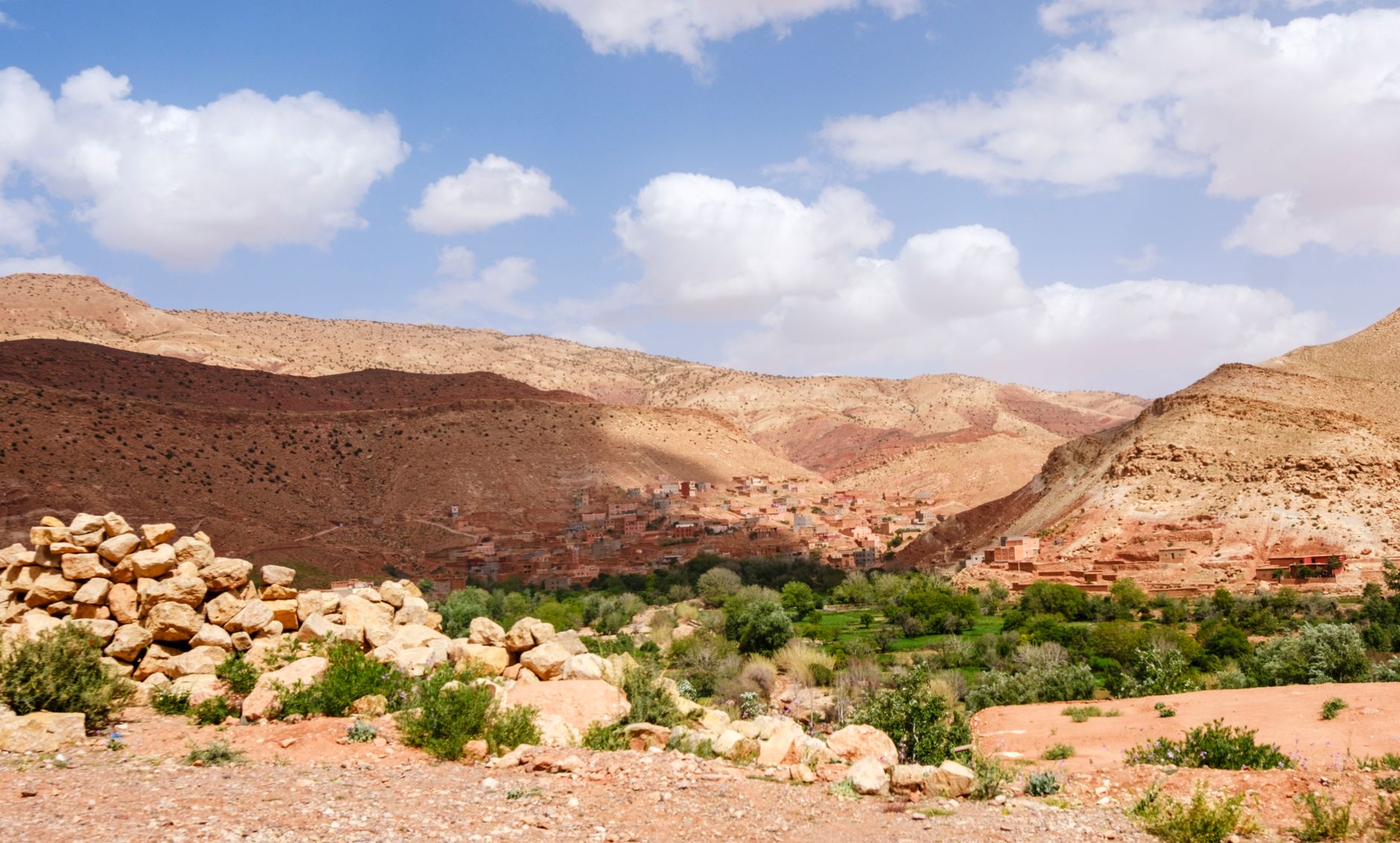
South of Marrakech, the road winds through terraced orchards before climbing into the sheer crimson passes of the High Atlas. Here, the landscape belongs to stone, sky, and adobe. Buildings are not constructed upon the earth; they are molded from it.
For centuries, the Amazigh people built fortified granaries and family kasbahs from rammed red clay mixed with straw and water. Thick earth walls create natural thermal inertia: cool during the intense desert midday sun and radiating gentle warmth when mountain night temperatures plummet.
“When your walls are built of local soil, the house breathes with the seasons, welcoming you like an old companion.”
Hospitality in the Valley of Walnuts
In the valley of Ourika and the heights around Imlil, time moves with the solar arc. Travelers who venture here find a serene alternative to the bustling riads of the city. Mornings begin with freshly baked flatbread dipped in cold-pressed olive oil, mountain honey, and fragrant mint tea poured from tall silver teapots.
Hand-knotted Berber rugs adorn clay floors, each geometric pattern telling ancestral stories of nomadic crossings, winter migrations, and familial lineages. At dusk, as the setting sun ignites the peak of Toubkal, the call to prayer drifts through the valley, echoing across ancient limestone gorges.
Essential Travel Realities
- • Transportation: Hire experienced local drivers for mountain passes; avoid night journeys along unpaved switchbacks.
- • Craft Ethos: Buy rugs and ceramics directly from village women's cooperatives to ensure financial proceeds remain in the valleys.
- • Stargazing: Elevation and absent light pollution make these peaks some of the premier celestial viewing platforms in North Africa.
To experience the Atlas is to understand that true luxury lies in simplicity: raw materials, honest bread, warm woolen blankets, and silence under a sky ablaze with constellations.